Traditional marketing has its place. Paid ads, email campaigns, SEO, print, events — these are all legitimate tools. But they share a fundamental limitation that personal branding doesn't: they broadcast at people rather than connecting with them.
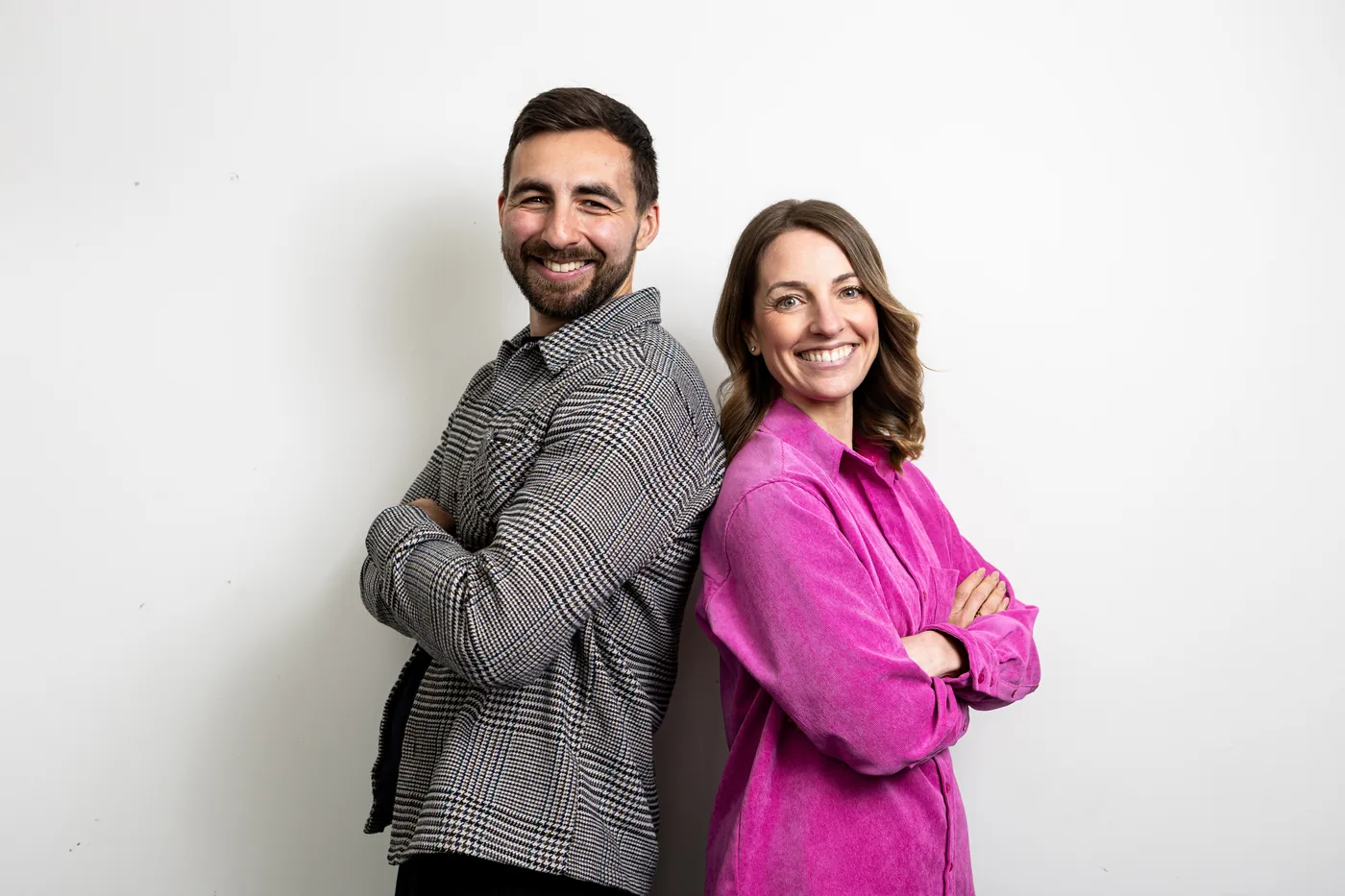
In this episode of Built To Be Seen, Caz and Toby compare traditional marketing approaches with the personal branding model — and explore what each does well, where each falls short, and why the smartest businesses are blending both.
Traditional Marketing Buys Attention. Personal Branding Earns It.
When you run a paid ad, you're buying visibility. The moment the budget runs out, the visibility stops. There's no residual effect, no relationship built, no trust generated. The audience saw an ad. That's it.
Personal branding takes longer to build, but what you build compounds. Every post is an ongoing asset. Every relationship you develop online is a connection that continues to generate value. The trust you earn through consistent, genuine content doesn't disappear when you stop paying — it accumulates, and it keeps working for you.
"Paid marketing turns off the moment you stop paying. Personal branding keeps working for you long after you've hit publish. One is renting, the other is owning."
People Trust People More Than Brands
Research consistently shows that people trust recommendations from individuals far more than they trust brand communications. A friend's recommendation outweighs the best-crafted advertisement every time. A real person sharing their genuine experience with a product lands differently than a polished campaign claiming the same thing.
This is the structural advantage of personal branding: when you are the brand, the trust transfers directly. When your clients recommend you, they're recommending a person — and that recommendation carries a weight that no corporate marketing can replicate.
Traditional Marketing Can't Replace the Human Connection
You can target demographics with precision using paid advertising. You can optimise copy and imagery for conversion. But you can't, through an ad campaign, make someone feel like they know you. You can't generate the sense of familiarity and connection that comes from following someone's genuine content for six months.
That feeling — of knowing someone, trusting them, feeling aligned with their values — is what makes buying decisions feel easy. Personal branding creates it. No amount of traditional marketing spend can manufacture it.
"No ad campaign makes someone feel like they know you. Only showing up as a real person, consistently over time, does that — and that's what converts."
They Work Best in Combination
This isn't an either-or situation. Traditional marketing can amplify a personal brand. Paid social can extend the reach of great personal brand content. Email newsletters can deepen the relationship with an audience you've built organically. SEO can bring new people into your ecosystem who then encounter your genuine voice and personality.
But the foundation has to be the personal brand. Without the trust, the authenticity, and the genuine human connection, the traditional marketing elements are less effective. With a strong personal brand underneath them, they become significantly more powerful because the relationship work is already done.
ROI Is Different — But Often Better
Traditional marketing ROI is relatively easy to measure: cost per click, conversion rate, cost per acquisition. Personal branding ROI is harder to attribute directly, but the returns are often far greater over time.
When Toby closes a headshot booking with someone who has been following his content for months, that conversion didn't come from a single ad. It came from a sustained campaign of genuine content that built trust incrementally. The "cost" of that content was primarily time — and the return is a client who already values the work before the conversation begins.
The Long Game Is Worth Playing
The biggest challenge with personal branding compared to traditional marketing is that the results take longer to materialise. Paid advertising can generate enquiries tomorrow. Personal branding takes months before it starts generating meaningful returns — and years to reach its full potential.
This makes it uncomfortable in the short term and incredibly powerful in the long term. The brands that start now and stay consistent are the ones that will be unassailable in their space five years from now. The ones that wait for quick results will keep spending on campaigns that stop working the moment they stop paying.